Why Does My Body Ache After Exercise? DOMS Explained in 5 minutes.
DOMS (delayed onset muscle soreness) is VERY common.
After exercise, it is entirely normally to feel sore, mild discomfort, and a little bit exhausted.
Infact, if you are consistently working out without experiencing exercise soreness it’s likely indicative that you are under-training at the thresh that yields the best results!
This is all apart of the process that comes along with training and conditioning your body to grow back stronger!
However; A debilitating complication with movement, sharp pain and throbbing pulse in the area is likely an indicator of more series injury.
If you’ve ever wondered why you are suddenly sore the day AFTER a workout, then stick around for some more easy to digest information!
Understanding Muscle Function and Exercises

Exercise serves as a vital stimulus for muscle function, triggering a series of processes inside your body that enhance athletic/physical performance and strength. Whenever you engage in physical activity, your muscles contract due to signals from the nervous system telling each part of your internal system to make muscles move and contract.
These muscle contractions require energy, which is produced through a LOT of different energy systems, predominantly anaerobic and aerobic pathways. (without and with oxygen, respectively.)
During short bursts of intense exercise, the body relies heavily on anaerobic metabolism, which provides energy rapidly but cannot sustain prolonged activity.
Conversely, during moderate aerobic exercise, the body utilizes oxygen to generate energy more efficiently over extended periods.
Think heavy bench-press vs running a marathon. You can’t run 5 miles without breathing, but you can push an object while forgetting to breath.
Our muscle fibers play an absolutely critical role in this process.
They are classified mainly into two types: Type I (slow-twitch) and Type II (fast-twitch) fibers.
There’s more nuance to that, but it’s easier to think of just those two for starting out.
Type I fibers are more fatigue-resistant and are primarily used during endurance activities, while Type II fibers provide the power required for high-intensity, short-duration exercises. The involvement of these muscle fiber types influences how an individual feels after exercise. For instance, a workout predominantly stressing Type II fibers could lead to more Muscle soreness due to greater exertion compared to an endurance workout that focuses on Type I fibers.
During exercise, micro-tears occur within the muscle fibers, a normal and necessary aspect of physical conditioning.
Although often perceived as pain or discomfort, this process facilitates muscle growth and adaptation, as the body repairs the damaged fibers, making them stronger in the long run.
As a result, after a workout session, individuals may experience muscle soreness, known as delayed onset muscle soreness (DOMS), which can range from mild discomfort to severe pain.
Hence, understanding muscle function and the complexities of energy systems highlights the reasons behind post-exercise fatigue and discomfort.
The Science Behind Exercise Soreness
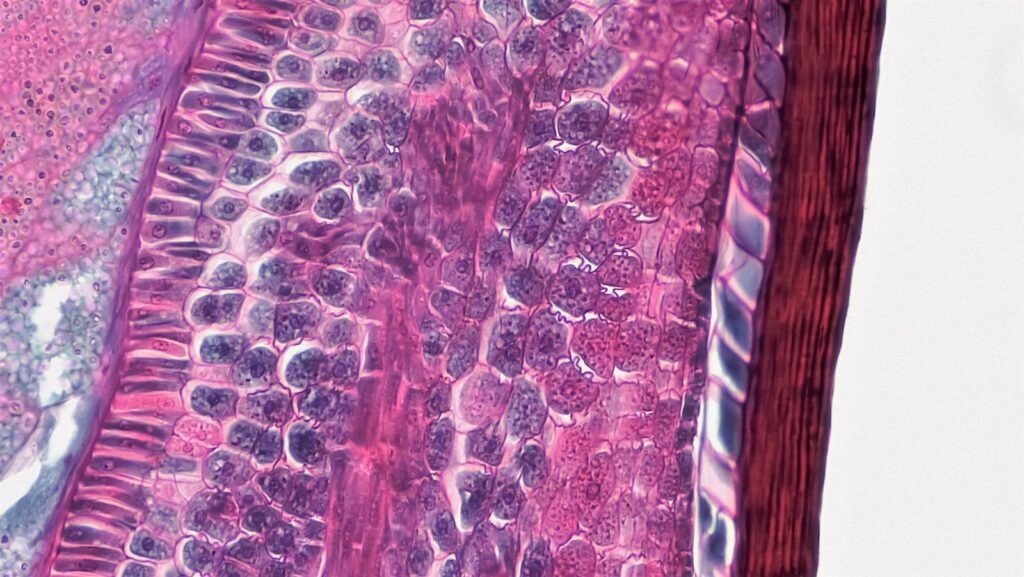
What Muscle looks like on a small scale
Experiencing muscle soreness after exercise is a common occurrence that everyone has to endure, it’s usually referred to as delayed onset muscle soreness (DOMS).
This phenomenon typically manifests as stiffness and soreness in the muscles, often peaking between 24 to 72 hours post-exercise.(most people, myself included say about 2 days after is when it HITS hits you.)
This discomfort arises due to several physiological processes triggered during and after physical activity. One of the primary factors contributing to soreness is the occurrence of micro-tears in muscle fibers. When muscles are subjected to stress, especially during resistance training or high-intensity workouts, these microscopic tears can result, leading to temporary discomfort as the body initiates the repair process.
For instance, during weightlifting, the lowering phase of a bicep curl engages the muscle eccentrically, which can induce micro-tears in muscle fibers.
In addition to micro-tears, another player in the field of post-exercise soreness is lactic acid production.
During strenuous workouts, the body tends to rely on anaerobic metabolism, a process that generates lactic acid as a byproduct. This accumulation can lead to the burning sensation often experienced during exercise. However, it is essential to note that lactic acid is cleared from the muscles within an hour after physical activity, and it is not the main cause of residual soreness experienced days later.
Inflammation also significantly contributes to the feelings of soreness felt post-exercise.
Following muscle damage, the body responds with an inflammatory process that serves to promote healing.
This inflammation can cause swelling, tenderness, and pain in the affected areas, which many recognize as the hallmark signs of soreness.
Ultimately, recognizing the signs of DOMS and employing effective recovery techniques can help mitigate discomfort and sustain an active lifestyle. A gradual introduction of exercise intensity and variation can also reduce the likelihood of experiencing severe muscle soreness.
By understanding the physiological processes behind DOMS, individuals can better navigate their fitness journey and achieve their physical goals.
Building Strength: How Consistent Training Reduces Soreness

Engaging in regular exercise is fundamental to enhancing physical strength and resilience. One significant benefit of consistent training is the reduction of soreness that many individuals experience after workouts.
Initially, when starting a new exercise routine or increasing the intensity of their existing regimen, aches/pain (doms). Over time, however, the body becomes accustomed to the physical demands placed upon it, leading to a decrease in post-exercise soreness.
This adaptation occurs as the muscles strengthen and the body becomes more efficient in repairing micro-tears that occur during exercise. As resilience builds, the muscles can handle increased loads with less discomfort. Each workout provides an opportunity for the body to adapt, ultimately fostering a more robust musculature that is better equipped to manage exertion without excessive soreness.
long story short, incorporating progressive overload into a training routine is VERY important to overcome the soreness. Pretty much you’ll just be gradually increasing the intensity, volume, or duration of exercise. By doing so, your muscles adapt and grow stronger over time.this takes a LOT of time, but through perseverance, it gets less intense and painful.
your best bet overall to make the doms go away is to have a consistent training routine. As your muscles adapt to regular physical activity, they grow stronger and more resilient, allowing you to work towards your goals with less discomfort.
Think of it like this: Each and every workout serves as a building block toward greater strength and endurance, that’ll make it less difficult in the future.
You build things better, sturdier and easier by doing things brick by brick.
In some sense, it’s just like building a house, a stable foundation is necessary before you can create something marvelous.